Every work has two sides.
OrielArt gives a gallery its website and the records behind it. Build free for 7 days; pay to publish.
Giovanni Paolo Panini, Modern Rome, 1757, oil on canvas (detail). The Metropolitan Museum of Art, open access.
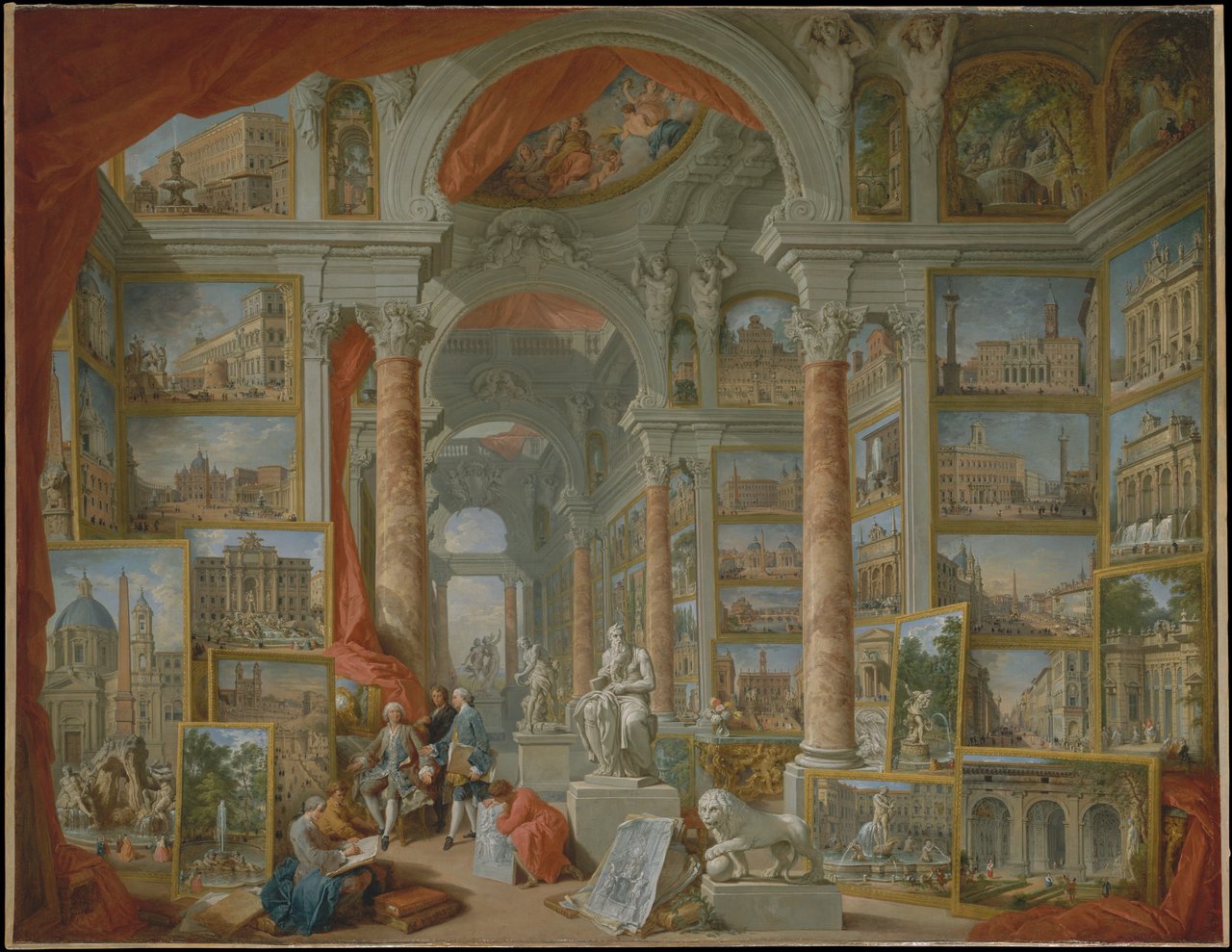
Giovanni Paolo Panini, Modern Rome, 1757, oil on canvas. The Metropolitan Museum of Art, open access.
In the painting
Select a view to outline it on the painting.
- Quirinal Palace
- St Peter's Square
- Trevi Fountain
- Michelangelo's Moses
- Castel Sant'Angelo
- Santa Maria Maggiore
- Piazza Navona
- Fontana Paola
Illustration of the artwork editor, simplified. Gallery and reference are fictional.
The record. Title, description, signature and source, entered once.
Its translations. The same record in English and French.
Where it is published. On the gallery's website, in every language it speaks.
Behind every work on your website: its record in OrielArt.
One record. Every language. Any design.
Enter a work once. OrielArt publishes it as a page in each of your languages, dressed by whichever design you choose.
Show the design
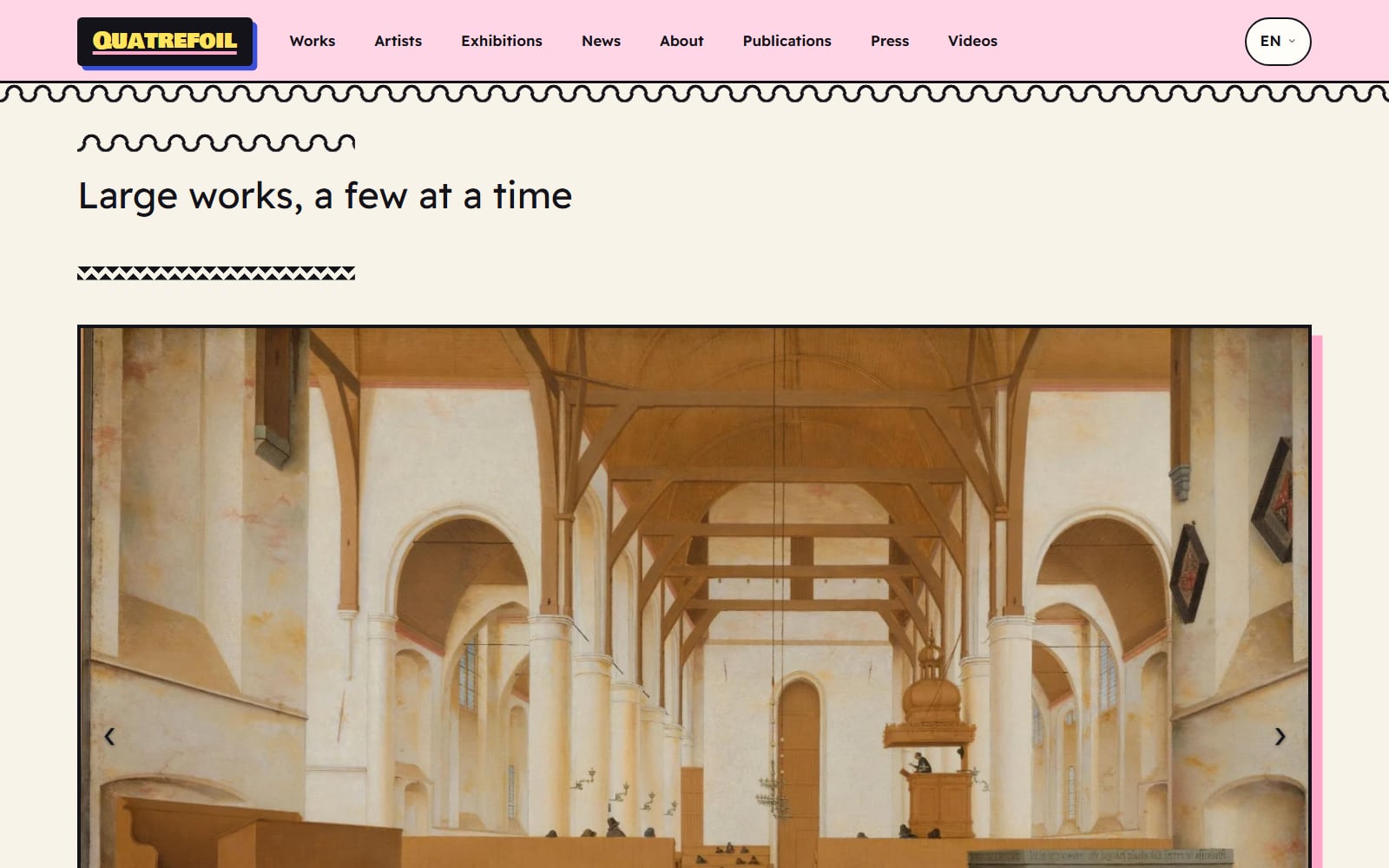
Quatrefoil
Memphis Milano, kept elegant: a terrazzo ground, black squiggle and zigzag bands, and every work on a coloured plinth with a bold prop behind it.
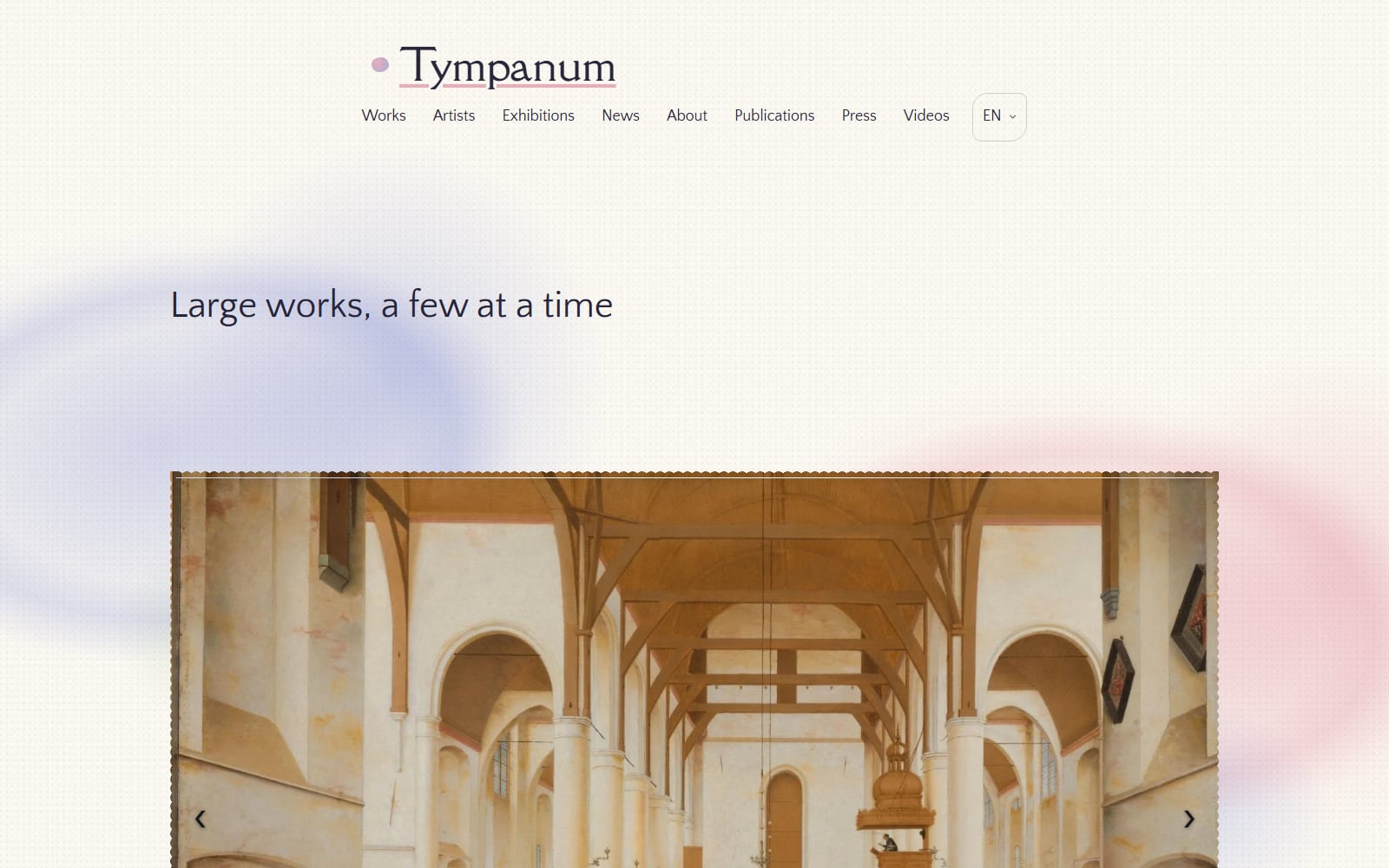
Tympanum
Watercolour on cold-press paper: soft washes of ultramarine, rose madder and sap green bloom behind deckled pictures in an airy, staggered journal.
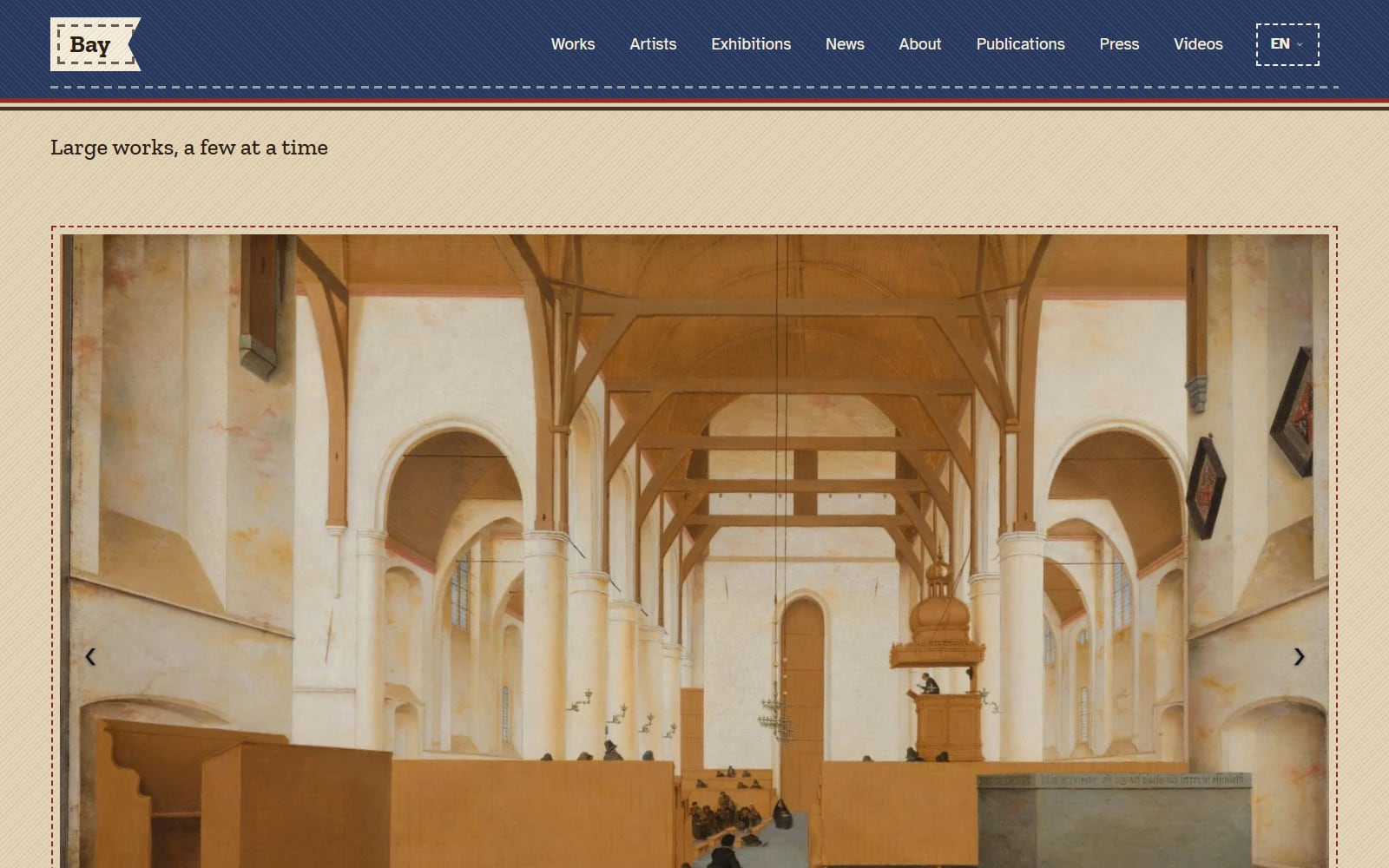
Bay
A woven textile: a twill ground in wool tones — madder red, undyed cream, walnut and indigo — pictures stitched onto the page in dashed frames with a cut label, titles on woven ribbons, and the works laid out as a patchwork quilt whose rows all differ. Zilla Slab and Atkinson Hyperlegible. Threads weave in from alterna
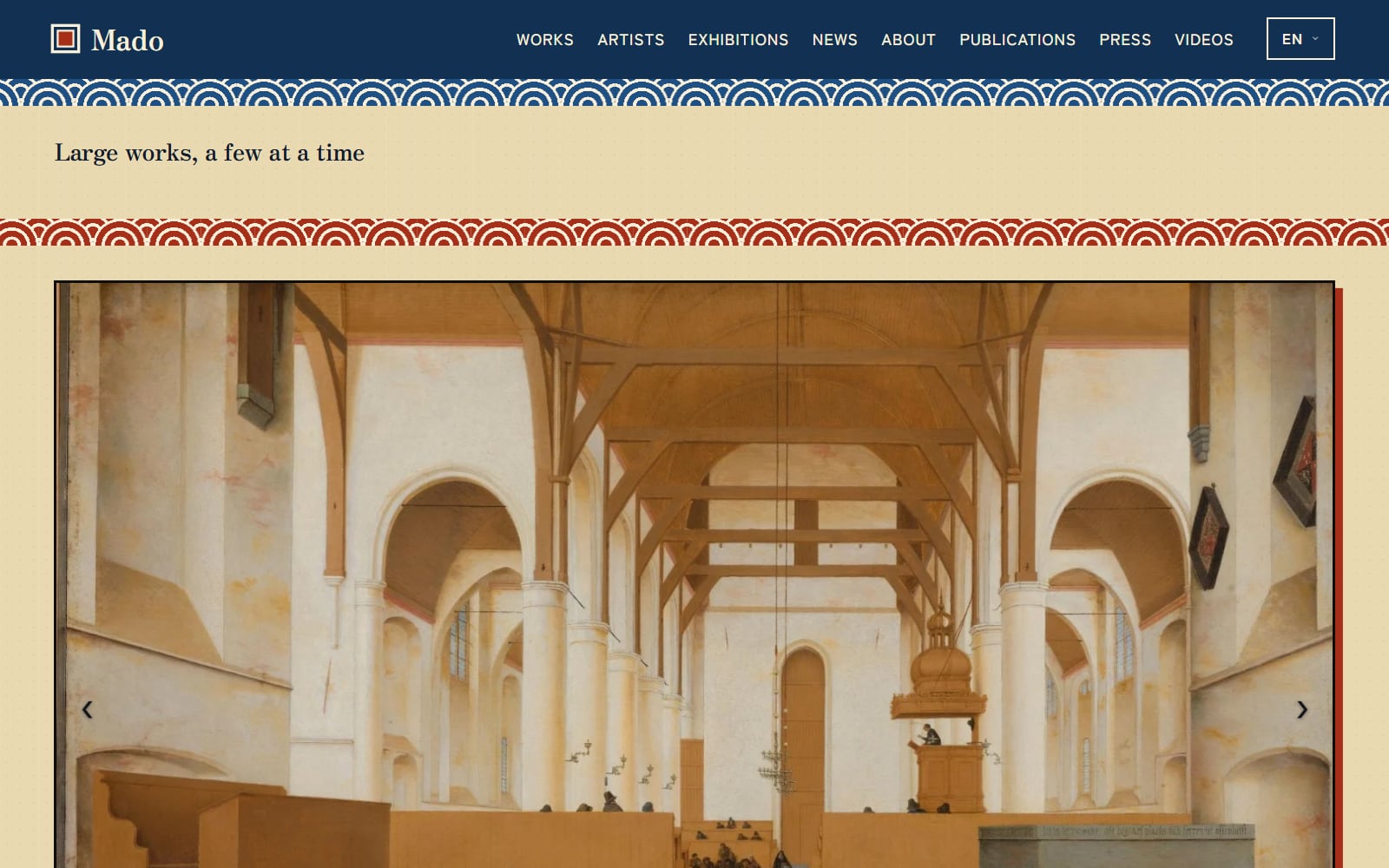
Mado
A window onto a Japanese woodblock print: flat planes of Prussian indigo, vermilion and ochre on a sand ground, every picture mounted in a keylined cartouche with a small red seal, works hung as tall pillar prints and bands of waves between the sections. Zen Antique and Zen Kaku Gothic. Each plane is printed one colour
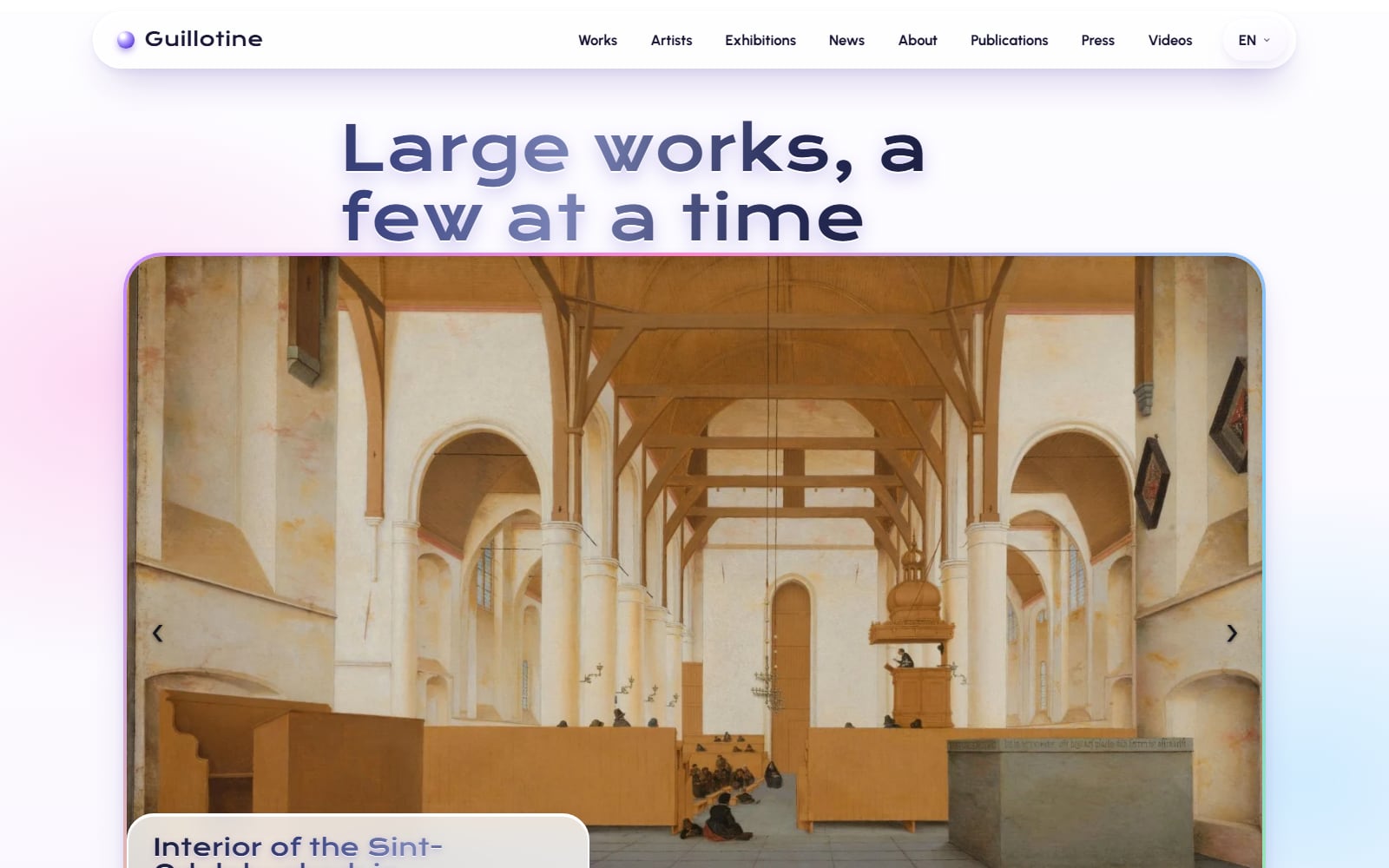
Guillotine
Y2K chrome on a pearl-white ground sliding to pale lilac, with soft blobs of light. Headings are liquid chrome with a highlight that slides across them, every picture sits in an iridescent holographic frame that turns hue as you scroll, and the interface is all bubbles and glossy pill buttons. Works float as a cloud of
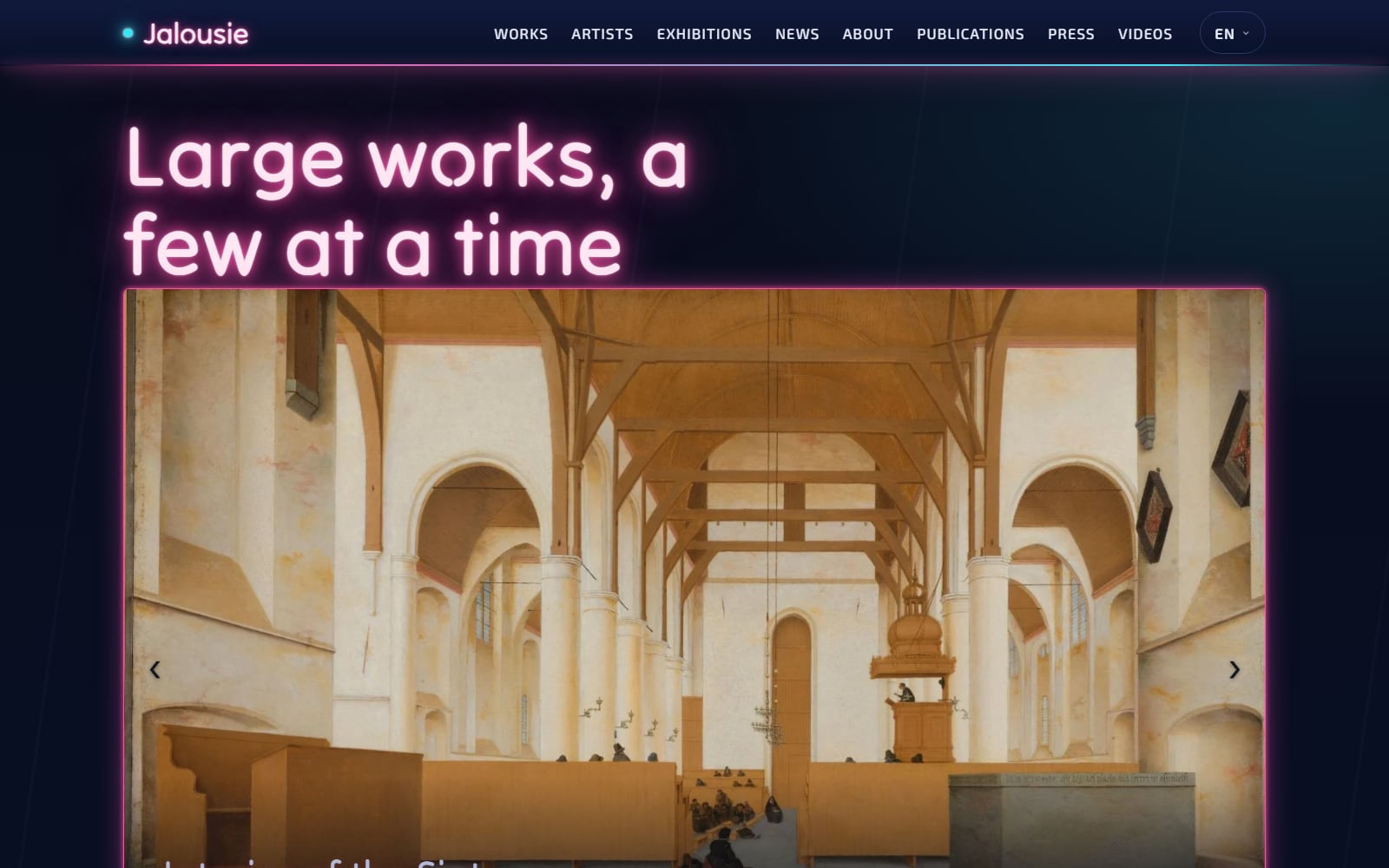
Jalousie
A wet street at night: deep blue-black asphalt with a soft sheen, every title a neon tube glowing pink or cyan over a dim off state. Works hang in lit shop windows, wide pairs in alternating neon, each inside a thin glowing outline with a puddle of reflected colour beneath it. Tilt Neon over Exo 2; the signs flicker on
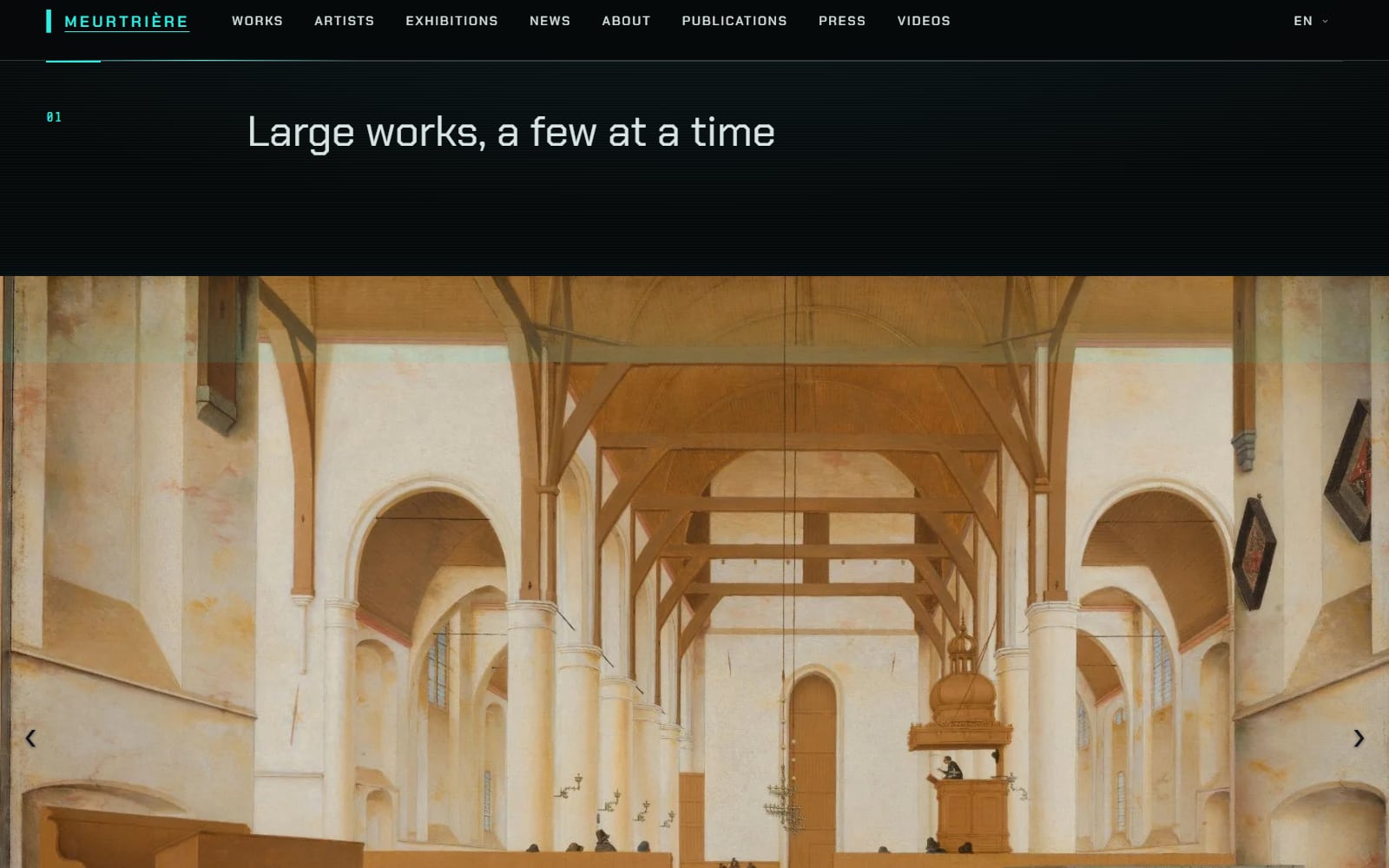
Meurtrière
Net art on a near-black screen: faint scanlines, one electric cyan, and pictures seen through arrow slits. In every list a work is a tall narrow window that widens when you hover or focus it, and each picture carries a controlled RGB split, a red and a cyan ghost that snap into register as it reaches the reading line.
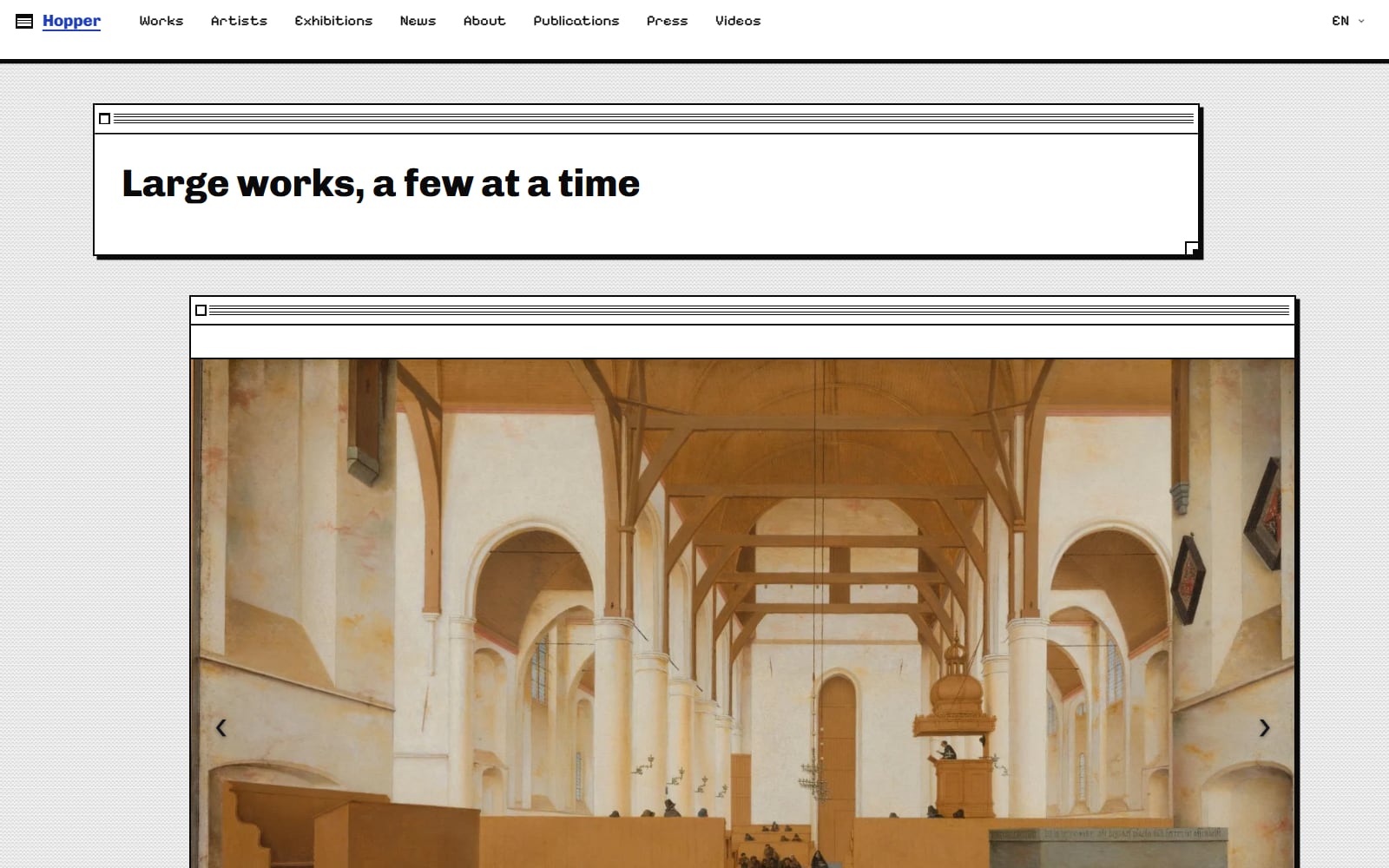
Hopper
The desktop of 1984: a light grey dither for the ground and every block, card and picture opened as a window, with a striped title bar, a close box, a grow corner and a hard one-bit shadow. The menu is a menubar that pulls down, a card presses in when you touch it, and the pictures stay full colour inside the monochrom
Each design is a live website on OrielArt. Every template works on Studio and Gallery.
Everything a gallery publishes, kept as records.
Works, artists, exhibitions, news, publications, press and videos. Each has its own fields, its own page and a version in every language.
- ArtworksDimensions, provenance, literature, prices, statuses and images.
- ArtistsBiographies, life dates, exhibition history and portraits.
- Exhibitions and fairsDates, venues, works on view, online viewing rooms.
- NewsPosts with categories, authors and dates.
- PublicationsCatalogues and books, with covers and page-flip links.
- PressClippings with outlet, date, quote and the article itself.
- VideosFilms from YouTube, Vimeo or a file link, captioned in every language.
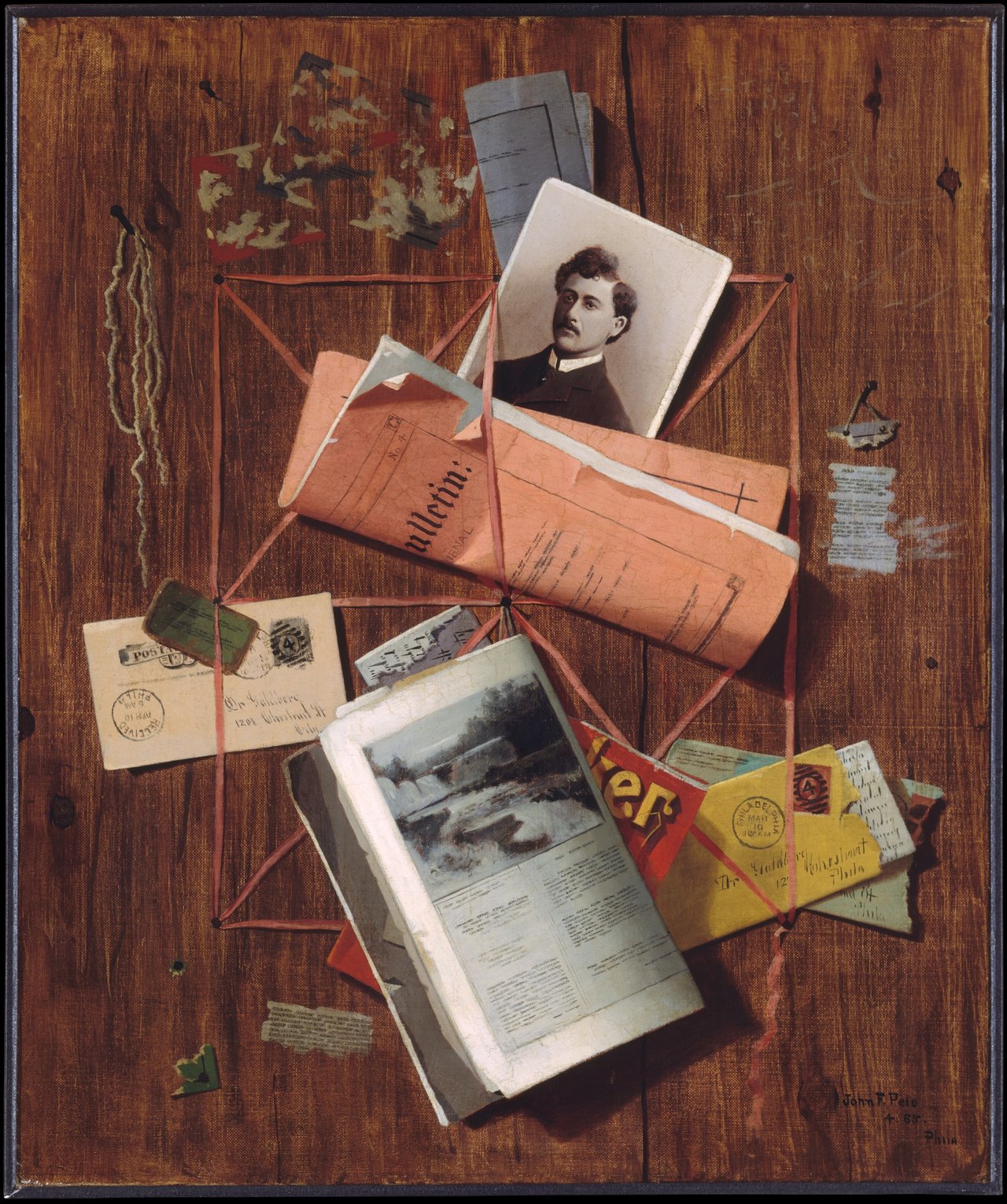
John F. Peto, Office Board, 1885, oil on canvas. The Metropolitan Museum of Art, open access.
The back of the record: clients, sales, invoices.
Enquiries from your website land in Contacts. Record sales, consignments and offers against the works involved. Invoices fill their lines from the works you pick.
Illustration: a contact card, a sale marked Confirmed and invoice INV-2026-0042 laid on a desk, joined by a line from the enquiry to the invoice, with the invoices list and its Export CSV button under them. The invoice lists a Hiroshige print and an Anna Atkins cyanotype, with discount, tax, shipping, insurance and the total.
-
Contacts Collectors, clients and press, with notes and tags. Repeat enquiries from one address stay on one card.
-
Transactions Sales, purchases, consignments in and out, offers. A fixed price or a percentage.
-
Invoices Numbered for you (INV-2026-0042), with discount, shipping, insurance, tax and Artist's Resale Right. Ready to print.
-
Export Every list exports to CSV whenever you need it.
Give each colleague the right keys.
Make roles such as Registrar or Sales and choose the sections each may open. Every plan includes as many colleagues as you need.
RegistrarArtworks, artists, categories and statuses.
SalesContacts, transactions and invoices.
Front deskContacts only.
Roles and permissions come with the Gallery and Platform plans.
Fix a sentence where you read it.
Signed in, you can edit a text block on the live page itself and save. No hunting for the right screen in the back office.
Windows
Paintings, prints and photographs, 1662 to 1906
12 September to 21 December 2026
Seven works about windows and the light that comes through them: Vermeer's morning, Rørbye's harbour, a cat on Hiroshige's sill, Hammershøi's rooms in Strandgade by day and by night, Anna Atkins's cyanotypes and, for colour, Redon's flowers.
Illustration of editing on the live site. The gallery is fictional.
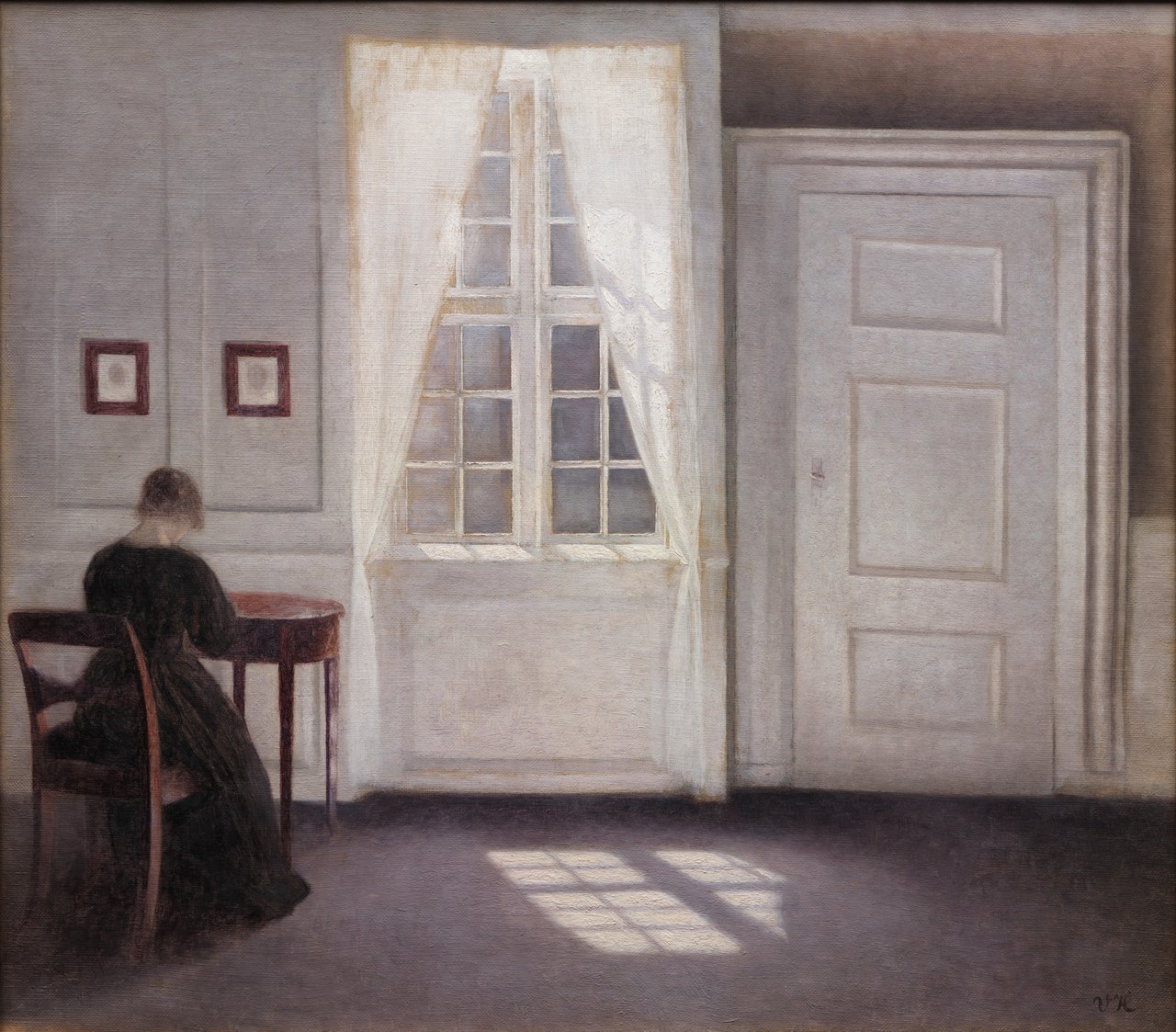
Vilhelm Hammershøi, Interior in Strandgade, Sunlight on the Floor, 1901, oil on canvas. SMK, National Gallery of Denmark, open access.
Works on the text blocks your team marks as editable. Changes save straight to the live page.
Your turn: press Edit and change a word. Nothing is saved.
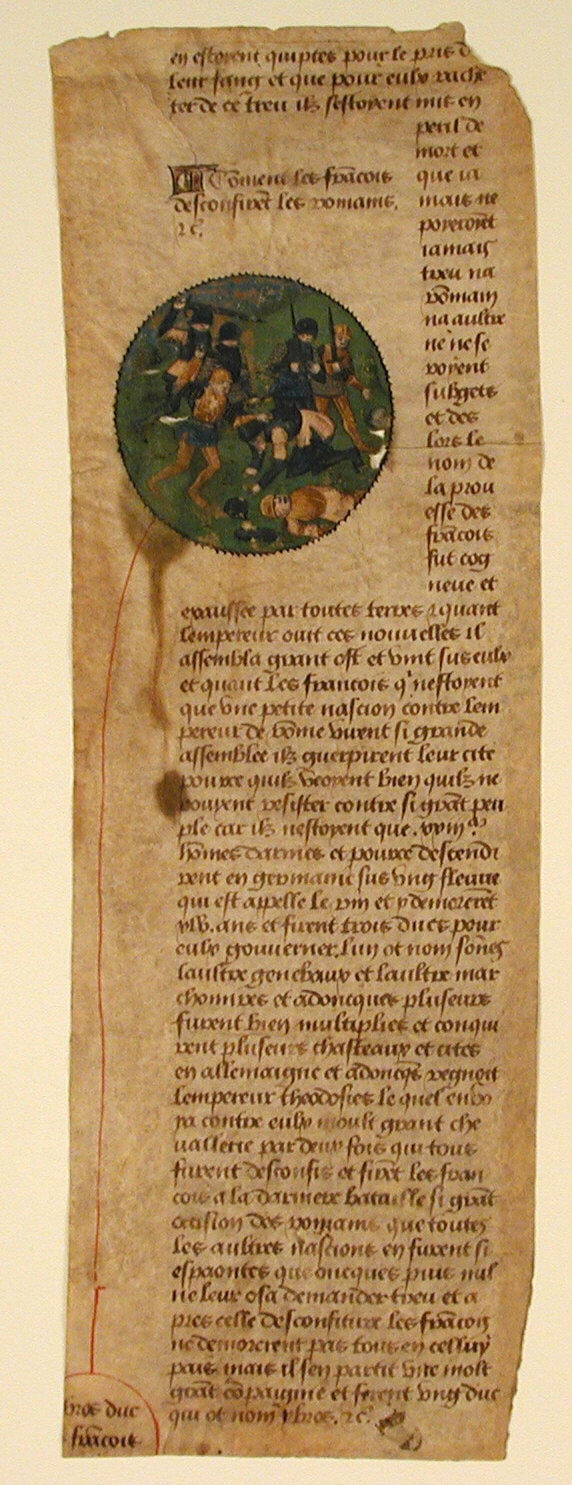
Manuscript Cutting from the Grandes Chroniques de France, mid-15th century, tempera, ink and metal leaf on parchment. The Metropolitan Museum of Art, open access.
English, French and every language you show in.
Each language gets its own addresses, its own menu labels and its own texts for every record. Search engines are told which page is which.
Modern Rome
/en/artworks/modern-rome
Rome moderne
/fr/artworks/modern-rome
«Современный Рим»
/ru/artworks/modern-rome
Add a language later: your existing texts are copied across, ready to translate. Prepare a language out of sight, then switch it on. Buttons, filters and form labels come translated in eight languages. Dates are written each language's own way: 6 Oct 2026 in English, 6 oct. 2026 in French.
From template to your own domain.
Four steps. The first 7 days are free; you pay only to publish.
-
Choose a template.
Every template is a live website with one example of everything: an artwork, an artist, an exhibition, a story. Every one works on Studio and Gallery.
-
Build it for free.
Your copy opens at yourname.orielart.com with its own back office. Replace the examples with your works, in every language you need. Only you can see it.
-
Publish on your domain.
When it is ready, choose monthly or yearly, pay and connect your own domain. Your website goes live there.
-
Grow with it.
Upgrade your plan whenever you need more, or order a custom design that stays yours alone.
You have 7 days to build for free. After that, your website is locked until you publish.
From €69 a month, per website.
Build free for 7 days, then pay to publish. Every colleague and every language included on every plan.
- Studio €69
- Gallery €119
- a month, excluding VAT
- Platform price on request
Questions galleries ask first.
How does the free period work?
You get your own website at yourname.orielart.com and 7 days to build it for free. Only you can see it. While you build, you work alone, with up to 5 records in each catalogue section. To publish it on your own domain, choose a plan and pay.
Do I need my own domain?
Yes, to publish. You keep it registered where it is and add the records we show you; your website goes live there with HTTPS. Your email is not affected.
Will our texts look right in French and other languages?
Yes. Each language has its own addresses and its own text for every record, with buttons, forms and dates in that language. OrielArt keeps your punctuation exactly as you type it. The back office is in English.
Choose a template and start building.
Free for 7 days. You pay only when you publish.
Questions first? Ask a question
Giovanni Paolo Panini, Modern Rome, 1757, oil on canvas. The Metropolitan Museum of Art, open access.